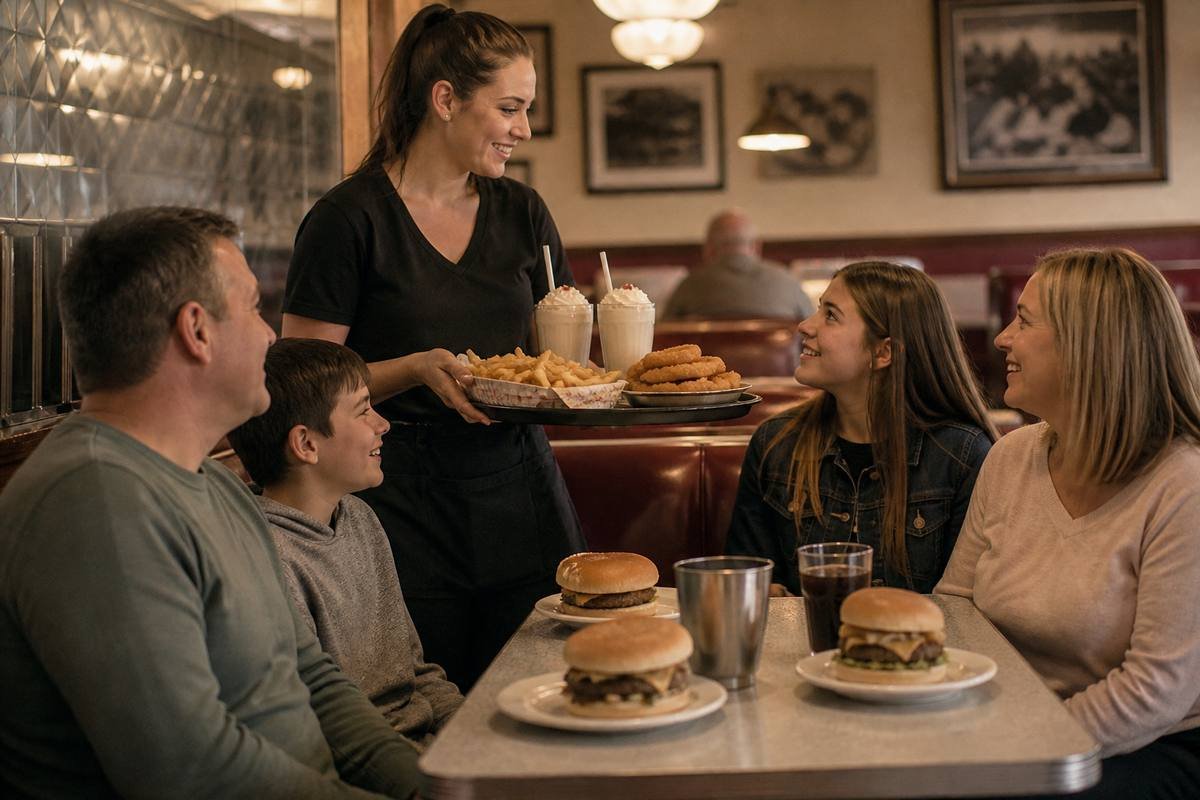
No burger arrives alone. Somewhere in the American imagination, the phrase “burger and fries” fused into a single word, and a patty served without something golden and crispy beside it feels like half a meal, no matter how good the sandwich is. Yet for all the attention lavished on the burger itself, the grind ratios, the smash techniques, the topping architecture, the supporting cast is usually an afterthought, a bag of frozen fries emptied onto a sheet pan while the real cooking happens elsewhere. This is a mistake, and a fixable one. The sides are not garnish; they are contrast, the crunch against the tender, the salt against the sweet, the cold shake against the hot beef. This article gives the burger’s companions the serious treatment they deserve: how to make genuinely great french fries at home, the secrets of onion rings that keep their coating, the milkshake as an engineering problem, and the full roster of alternates from coleslaw to fried pickles.
French Fries: The Non-Negotiable Classic
The french fry is the burger’s oldest and truest partner, and it is also the side most people quietly give up on making at home. Homemade fries come out limp, or pale, or soggy within minutes, and the frozen bag wins by default. The gap between homemade and restaurant fries, however, is not equipment or secret ingredients. It is one piece of knowledge: great fries are cooked twice.
Why Double Frying Works
A raw potato stick dropped into hot oil faces two competing jobs. The inside needs long, gentle cooking to become fluffy, and the outside needs short, violent heat to become crisp. One trip through the oil cannot do both. Fry hot enough to crisp the exterior and the center stays chalky; fry gently enough to cook the center and the outside never crisps.
The solution, standard in every good kitchen since the Belgians worked it out generations ago, is to split the jobs. The first fry, at a moderate 325 degrees Fahrenheit for about five minutes, cooks the interior through and begins drying the surface, leaving the fries pale, floppy, and unfinished. The fries then rest, and the rest matters: as they cool, moisture migrates outward and the surface starches set into a shell-in-waiting. The second fry, at a hard 375 degrees for two to three minutes, blasts that prepared surface into a deep golden crust while the inside merely reheats. The result is the restaurant fry: shattering outside, cloud inside, and crucially, a crust sturdy enough to stay crisp through an entire burger.
The Supporting Details
The potato itself should be a russet, whose high starch and low moisture make the fluffiest interior; waxy red and gold potatoes produce dense, greasy fries. Cut the sticks about a quarter-inch thick for the classic profile, and rinse them in cold water until the water runs clear, which washes off surface starch that would otherwise cause sticking and spotty browning. Dry them thoroughly, because water and 375-degree oil hold violent opinions about each other. Peanut oil is the flavor-and-performance champion, with refined vegetable or canola oil a fine substitute. Salt the fries the instant they leave the second fry, while the surface oil still glistens and grabs the crystals, never before frying, and never after they have cooled.
For cooks who refuse to deep-fry at home, and it is a reasonable refusal, the oven and air fryer versions improve dramatically with one borrowed idea: parboil the cut potatoes for four minutes, dry them, toss with oil, and then roast at high heat. The boil does the first fry’s job. The results will not equal the fryer, but they will embarrass anything from a freezer bag.
Onion Rings: The Fry’s Glamorous Rival
If the fry is the burger’s steady companion, the onion ring is its special-occasion date, more dramatic, more indulgent, and far easier to get wrong. Every onion ring failure is the same failure: the first bite pulls the entire onion out of its coating in one long, scalding ribbon, leaving the eater holding an empty fried shell.
The fix is threefold. First, choose sweet onions, Vidalia or similar, sliced a half-inch thick, and separate the rings; the inner tiny circles are cook’s treats, the wide outer rings are the keepers. Second, and this is the professional secret, dust the naked rings in plain flour before they touch the batter. Batter cannot grip slick, wet onion, but it grips floured onion like a handshake. Third, soak the rings in buttermilk for thirty minutes beforehand, which seasons the onion and begins softening its structure so that a bite cuts cleanly through instead of dragging the whole ring free.
For the coating itself, two schools compete honorably. Batter, a pourable mixture of flour, cornstarch, and cold sparkling water or beer, produces the puffy, golden diner-style ring, with the carbonation adding lightness and the cornstarch adding crunch. Breading, the three-step flour, egg, and breadcrumb procedure, produces the craggy, extra-crunchy roadhouse ring, especially with panko crumbs. Either way, fry at 350 to 365 degrees, work in small batches, and eat them indecently fast, because no fried food falls from its peak quicker than an onion ring.
The Milkshake: Cold Chemistry
The third leg of the classic trio is the milkshake, and it earns its place through contrast: a burger meal alternates the hot, salty, savory bite with the cold, sweet, creamy sip, and each makes the other better. The shake is also, quietly, the easiest of the three to perfect at home, because its failures are all failures of ratio.
A milkshake is ice cream loosened with milk, nothing more, and the loosening is where shakes die. Too much milk produces the thin, sad, drink-through-a-straw-in-one-pull shake; too little produces spoonable ice cream soup anxiety in reverse. The working ratio is one cup of good vanilla ice cream to a quarter cup of whole milk, scaled up as needed, blended briefly, ten to fifteen seconds, just until smooth. Longer blending melts the ice cream with friction and thins the result. The ice cream should soften on the counter for five minutes first, which lets the blender work quickly instead of grinding.
The malt, the mid-century soda fountain’s masterstroke, deserves revival: two tablespoons of malted milk powder per shake adds a toasty, nostalgic depth that turns a chocolate shake into a chocolate malt, arguably the single best liquid pairing a cheeseburger has ever had. Frozen custard, the Midwest’s egg-yolk-enriched answer to ice cream, makes the richest shake of all, and any shake benefits from a pinch of salt, which sharpens sweetness the same way it sharpens everything else.
The Full Roster: Matching Sides to Burgers
Beyond the big three, a deep bench of sides waits for the right burger, and matching them thoughtfully is its own small art. The table below pairs the major options with the builds they flatter most.
| Side | Character | Best Burger Pairing |
|---|---|---|
| Classic fries | Crisp, salty, neutral | Everything; the universal partner |
| Onion rings | Sweet, crunchy, rich | Simple cheeseburgers that need drama |
| Sweet potato fries | Sweet, earthy, softer | Spicy and barbecue-style builds |
| Coleslaw | Cold, creamy, acidic | Heavy bacon and fried-topping burgers |
| Fried pickles | Sharp, crunchy, salty | Rich, fatty pub burgers |
| Potato salad | Cool, creamy, mustardy | Backyard grilled burgers |
| Baked beans | Sweet, smoky, hearty | Cookout and barbecue burgers |
| Corn on the cob | Sweet, fresh, buttery | Summer grill sessions |
| Side salad | Light, acidic, crisp | Oversized gourmet burgers |
| Cheese curds | Squeaky, molten, rich | Butter burgers, Midwest style |
Two principles guide the pairing. First, compensate: a rich, heavy burger wants an acidic or cold side, coleslaw, pickles, or salad, while a modest burger can afford an indulgent partner like rings or curds. Second, respect the plate’s total salt and fat budget; a bacon double cheeseburger flanked by cheese curds and a malt is not a meal but a challenge, and challenges are rarely delicious past the halfway mark.
The Case for Coleslaw, Briefly
Of all the alternates, coleslaw is the most underrated burger side in America, and it deserves a paragraph of advocacy. A properly made slaw, shredded cabbage and carrot, dressed lightly with mayonnaise, cider vinegar, a spoon of sugar, and celery seed, then rested an hour, is everything a rich burger cries out for: cold against the heat, crunchy against the tender, sharp against the fat. In much of the South, slaw does not sit beside the burger but climbs directly onto it, and one bite of a slaw-topped burger explains the custom instantly. Make it a day ahead; slaw, like several of history’s best ideas, improves overnight.
Fry Sauce and the Dipping Question
A word on what the sides are dipped in, because ketchup’s monopoly is worth breaking. Utah’s fry sauce, two parts mayonnaise to one part ketchup with a splash of pickle brine, is the gateway. Beyond it lie garlic aioli, honey mustard for sweet potato fries, ranch for onion rings, malt vinegar for thick-cut fries in the British style, and the humble but transformative move of salting fries with seasoned salt instead of plain. A burger night with three dipping sauces in small bowls costs five minutes and changes the character of the table; suddenly the sides are a course, not an accessory.
Building the Complete Plate
Pull it together and the perfect burger meal becomes a matter of sequencing rather than luck. The slaw and the shake base go into the refrigerator in the morning. The potatoes get their first fry before the burgers start; they rest happily while the patties cook, and their second fry takes two minutes just as the burgers come off to rest, so that everything lands on the table hot at once, which is the entire trick of short-order cooking distilled. The rings, if rings there are, fry in the same oil right after the fries. The shakes blend last, thirty seconds before sitting down, into glasses that spent an hour in the freezer.
The burger may be the headliner, but everyone who has ever mourned a great patty served beside limp fries knows the truth: the meal is an ensemble, and it is only as good as its weakest player. Master the double fry, flour the onion before you batter it, hold the milk to a quarter cup, and put something cold and sharp on the plate. Do that, and the phrase “burger and fries” stops being a habit and becomes, once again, exactly what it was at the first drive-in seventy-five years ago: a promise that both halves of the plate are worth finishing.
Leave a Reply