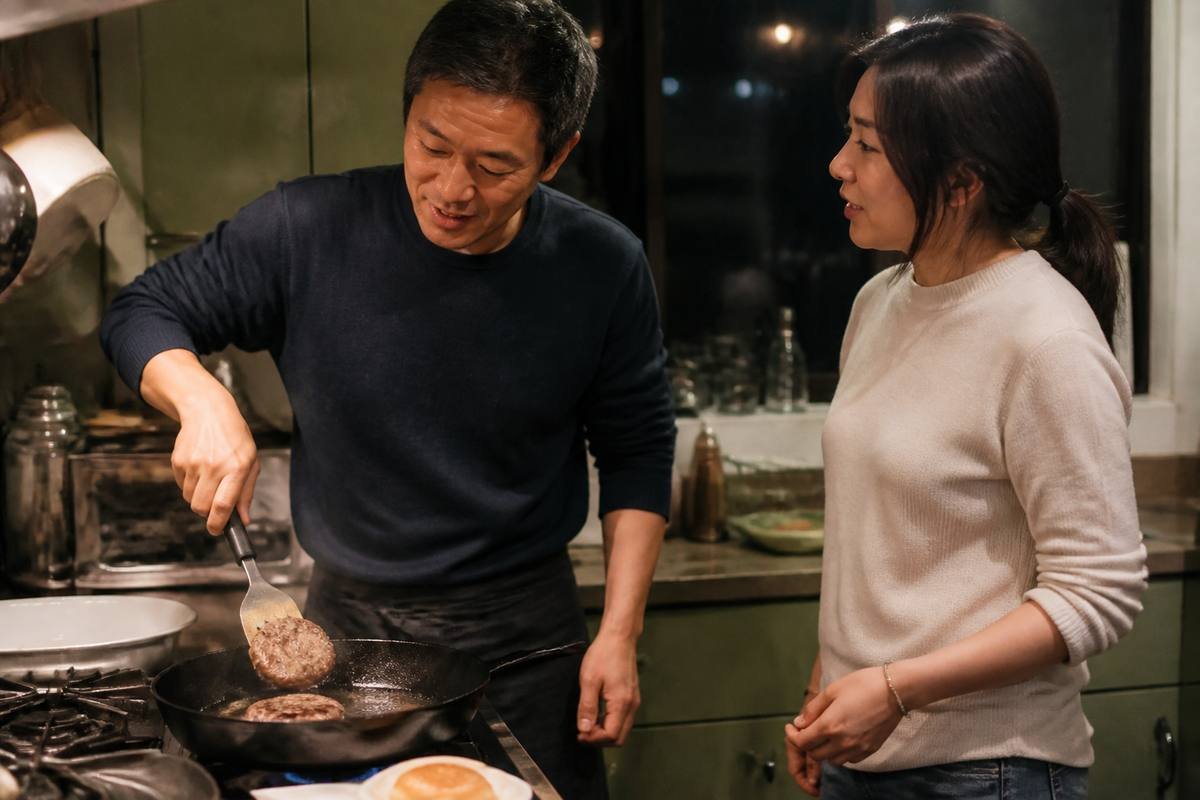
Walk into any kitchen store, type “burger” into any shopping site, and a small industry rises to greet you. Patty presses with adjustable dials. Burger-shaped silicone molds. Stuffed-burger gadgets promising a foolproof Juicy Lucy. Eighty-dollar smasher kits, laser thermometers, onion-holding forks, and at the summit, gleaming thousand-dollar outdoor griddles the size of a card table. The message is that great burgers are bought, one accessory at a time. The truth runs nearly opposite: the best burgers in America are cooked with a short list of humble tools, several of which are probably in your kitchen already, and a few of the most popular burger gadgets on the market actively make burgers worse. This article is the complete, honest equipment guide, what each tool actually does, which versions to buy, what they should cost, and a clear-eyed sorting of the marvelous from the useless, so that your money goes into beef instead of drawers.
The Heart of the Operation: The Cooking Surface
Every burger decision downstream depends on what the patty cooks on, so the surface deserves the most thought and, if anything does, the most money.
The Cast-Iron Skillet: The Undisputed First Purchase
If a burger kitchen could own only one object, it would be a twelve-inch cast-iron skillet, and the case is overwhelming. Cast iron holds enormous thermal mass, which means that when a cold patty hits the surface, the temperature barely dips, and the Maillard browning that defines a great crust proceeds without interruption; thin aluminum pans, by contrast, lose their heat to the meat and boil the patty in its own juices. Cast iron is also effectively immortal, improves with use as its seasoning builds, moves from stovetop to oven to campfire, and costs less than two fast-food combo meals. A new skillet from the major American makers runs twenty to forty dollars, and a garage-sale antique, restored with an hour of elbow grease, is often better than new. There is no other purchase in cooking with this ratio of performance to price.
The Flat-Top Griddle: The Upgrade That Changes the Game
The next step up is a true flat-top, either a two-burner steel griddle plate laid across the stove or the freestanding propane griddles that have conquered American patios over the past decade. What the flat-top adds is real estate: eight patties, a pile of onions, and four toasting buns, all cooking simultaneously on one uninterrupted plane, which is the difference between making a burger and running burger service for a family or a party. The outdoor units also solve the great indoor smash burger problem, smoke, by moving the entire operation outside. Prices run from about forty dollars for a stovetop plate to two hundred and up for a freestanding patio unit, and for households that cook burgers weekly, the freestanding griddle is the single most life-improving purchase on this list.
The Grill: Wonderful, and Slightly Overrated for Burgers
Heresy must occasionally be spoken plainly: the beloved backyard grill is the third-best burger surface. Grates only touch a fraction of the patty, so crust develops in stripes rather than sheets; precious rendered fat falls into the fire instead of frying the beef; and flare-ups convert dripping juice into acrid soot. The grill’s genuine advantages, smoke flavor and the theater of live fire, favor thick, pub-style patties, where char and smoke have a broad canvas. Grill owners need no new purchase beyond one accessory: a heavy cast-iron griddle insert that sits over the grates, delivering flat-top performance with charcoal ambiance, usually for under fifty dollars.
The Hand Tools: Where Cheap Excellence Lives
The Spatula Question
The burger spatula is not one tool but two, and most kitchens own neither. For smash burgers, the essential instrument is a stiff, sharp-edged steel spatula, often sold as a griddle scraper or “hamburger turner,” whose thin beveled edge can shear a crusted patty off the steel with the crust intact; a flexible silicone flipper, the default in most drawers, folds against a properly stuck smash patty and leaves the best part of the burger welded to the pan. For thick patties on the grill, the requirement reverses: width and support matter more than edge, so a broad, sturdy blade prevents the flip from becoming a break. Ten to twenty dollars buys the best version of either, and the pair together cost less than a single restaurant burger.
The Smasher, the Press, and an Important Distinction
Here the gadget aisle sets its cleverest trap, because two nearly identical-looking tools sit side by side, and one is excellent while the other is a burger crime. The smasher, a flat, heavy disk of steel with a handle, exists to flatten a ball of beef against a hot griddle in the first seconds of cooking, maximizing crust; it does one thing, does it with satisfying authority, and earns its twenty-to-thirty-dollar price for anyone who finds the two-spatula press-down awkward. The patty press, its evil twin, is a mold that compresses raw beef into dense, uniform pucks before cooking, and it is the enemy of everything this site has ever taught: compression develops myosin, myosin makes patties bouncy and tough, and the press’s tidy hockey pucks cook up rubbery every time. A gentle hand and a kitchen scale outperform every patty press ever sold. The visual similarity of these tools, and the moral chasm between them, is the equipment aisle in miniature.
The Thermometer: The Ten-Dollar Truth Machine
No tool on this list improves outcomes per dollar like an instant-read digital thermometer. Color lies, timing charts lie, poking the patty and consulting your palm lies; the probe does not. A basic fast-reading digital model costs ten to twenty dollars, reads in a few seconds, and converts doneness from folklore into arithmetic, medium-rare at 130 to 135 degrees, the food-safety standard at 160. The luxury versions with instant response and waterproof bodies are lovely, but the cheap one in a drawer beats the fancy one left in the store. This is the first tool to gift any new burger cook.
The Ambition Tier: Grinding at Home
For the cook ready to control the burger at the molecular level, the grinder opens the final door: custom blends of chuck, brisket, and short rib, ground coarse, handled once, cooked the same hour, a freshness and texture no packaged beef can match. The surprise is how little the door costs. The grinding attachment for the stand mixer that already lives on many American counters runs fifty to sixty dollars and handles family volumes with ease; dedicated electric grinders start around a hundred. Even the food processor, pulsing cubed, partially frozen chuck in small batches, produces a respectable rough grind for free. The technique matters more than the machine: meat and grinder parts near-frozen, cuts cubed small, and everything moving quickly, because warmth smears fat and ruins texture. Home grinding is not a daily practice; it is a Saturday ritual for burgers that matter, and it is the cheapest “professional secret” in the entire craft.
The Verdict Table: What to Buy, in Order
| Priority | Tool | Typical Cost | Verdict |
|---|---|---|---|
| 1 | 12-inch cast-iron skillet | $20 to $40 | Essential; the foundation |
| 2 | Instant-read thermometer | $10 to $20 | Essential; ends all guessing |
| 3 | Stiff steel griddle spatula | $10 to $20 | Essential for smash burgers |
| 4 | Kitchen scale | $10 to $15 | Essential; even patties, honest portions |
| 5 | Burger smasher disk | $20 to $30 | Worthwhile luxury |
| 6 | Outdoor flat-top griddle | $200 and up | Transformative for frequent cooks |
| 7 | Grinder attachment | $50 to $100 | For the ambitious; huge payoff |
| 8 | Cast-iron grill griddle insert | $30 to $50 | Best grill accessory made |
| — | Patty press mold | $15 to $30 | Avoid; makes burgers worse |
| — | Stuffed-burger gadgets | $10 to $25 | Avoid; two spoons do it better |
| — | Silicone patty molds, burger baskets | Various | Avoid; solutions without problems |
The arithmetic at the top of the table deserves emphasis: the four essential tools together cost roughly sixty to ninety dollars, less than a single premium burger night out for a family, and they constitute, with no exaggeration, the same functional toolkit used by celebrated smash burger restaurants, whose kitchens reduce to exactly this: thick steel, sharp spatula, scale, and thermometer, repeated ten thousand times.
The Supporting Cast and the Setup
A few unglamorous items round out the station. Parchment paper squares, for stacking prepped patties and for pressing the smasher without sticking, cost pennies and prevent the day’s most annoying failures. A small dome lid or an inverted steel bowl turns any skillet into a cheese-melting steam chamber with a teaspoon of water, the thirty-second professional melt. A wire rack over a sheet pan holds finished patties without steaming their crusts soggy, the resting equivalent of toasting the bun. And two cutting boards, rigidly segregated for raw and cooked, plus a stack of clean kitchen towels, complete a setup that would pass muster in a restaurant inspection.
Arrange it all with the assembly line in mind, raw patties to the left of the heat, tools at hand, buns and cheese staged to the right, plates beyond, because the final piece of equipment is the layout itself. A burger cooks in minutes and assembles in seconds, and the cook who must cross the kitchen for the cheese while the patty overcooks has been defeated not by skill but by geography.
The Point of All This Iron
Strip the arsenal to its philosophy and it comes to this: burger equipment exists to deliver ferocious, stable heat, to move the patty without breaking its crust, and to replace guesswork with measurement. Everything on the buy list serves one of those three missions; everything on the avoid list serves none of them, existing instead to sell the feeling of expertise as a molded plastic object. The craft itself remains stubbornly, beautifully cheap. A century of American burger genius, from the Wichita slider men to the smash burger laureates of the present day, has run on hot iron, sharp steel, and attention, and a home cook can buy the entire inheritance for the price of dinner. Spend the savings where the burger will taste it: on fresh chuck, real cheese, and potato rolls, cooked on a skillet that will outlive everyone at the table.
Leave a Reply