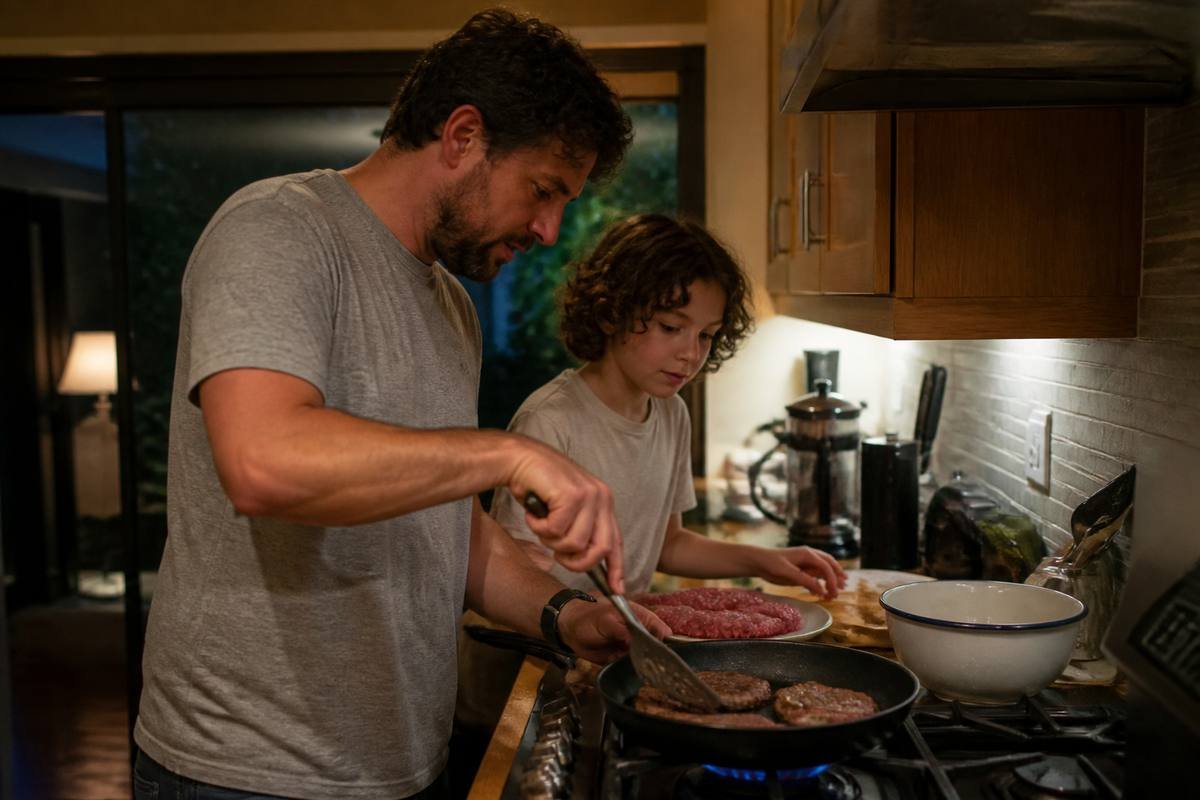
There is a peculiar frustration known to almost every home cook in America. You can follow a recipe to the letter, buy the same ground beef the restaurant supposedly uses, and fire up a perfectly good grill, yet the burger that lands on your plate somehow never tastes like the one from your favorite burger joint. The patty is dense where theirs was tender, dry where theirs was juicy, and gray where theirs had a deep, savory crust. The good news is that none of this is a mystery, and none of it requires professional equipment. Restaurant-quality burgers come down to a series of small, learnable decisions about meat, heat, handling, and assembly. This guide walks through every one of those decisions, so the next burger you cook at home may honestly be the best one you have ever eaten.
It All Starts with the Beef
Every great burger begins long before the grill is lit. The single most important choice you will make is the meat itself, and there are three factors that matter: fat content, cut, and grind.
Fat Is Not Optional
If you remember only one thing from this entire article, remember this: choose ground beef with at least twenty percent fat. The classic ratio, written as 80/20, means eighty percent lean meat and twenty percent fat. Fat is where the flavor lives. It bastes the patty from within as it melts, keeps the texture loose and juicy, and carries the beefy aroma that makes a burger smell like a burger.
Many well-meaning shoppers reach for 90/10 or even 93/7 ground beef, believing they are making the healthier choice. What they are actually buying is a patty that will be dry and crumbly no matter how carefully it is cooked. Lean beef has its place in the kitchen, but that place is not inside a bun. If health is a concern, a better strategy is to eat a properly fatty burger slightly less often than to eat a disappointing lean one every week.
Which Cuts Make the Best Burgers
Standard ground chuck, taken from the shoulder of the cow, is the workhorse of burger cooking, and for good reason. It naturally carries close to the ideal fat ratio and has a robust, classic beef flavor. For everyday burgers, ground chuck alone will serve you extremely well.
If you want to go further, ask your butcher to grind a custom blend, or grind your own at home with a food processor and thirty minutes of patience. The table below outlines the most popular burger cuts and what each contributes to the final result.
| Cut | Approximate Fat Content | What It Brings to the Blend |
|---|---|---|
| Chuck | 15 to 20 percent | Balanced flavor, the ideal foundation |
| Brisket | 20 to 25 percent | Rich fat and deep, smoky beefiness |
| Short Rib | 20 to 25 percent | Luxurious texture and buttery flavor |
| Sirloin | 8 to 12 percent | Clean, steak-like taste, needs added fat |
| Round | 8 to 10 percent | Lean and mild, best as a minor player |
A widely loved combination among burger enthusiasts is fifty percent chuck, twenty-five percent brisket, and twenty-five percent short rib. It costs more than pre-ground beef, but for a special occasion the difference is unmistakable.
Freshness and the Grind
Beef that is ground fresh and cooked the same day has a looser, more tender texture than packaged meat that has been compressed in plastic for days. If your supermarket has a butcher counter, ask them to grind chuck for you while you wait. Look for a coarse grind rather than a fine one, since finely ground beef packs together too tightly and produces a dense, sausage-like patty.
Handling the Meat: The Gentle Touch Rule
Here is where most home burgers go wrong, and it happens before the stove is even turned on. Ground beef is delicate. Every time you press, knead, or squeeze it, you develop the proteins and pack the meat tighter, and a tightly packed patty cooks up rubbery and tough.
Treat the meat as if it were a fragile dough. Portion it into loose balls, roughly six ounces each for a substantial pub-style burger or three to four ounces each if you plan to make thin, crispy patties. Form each ball with as few motions as possible, then flatten it gently into a disk about three-quarters of an inch thick. Do not slap it back and forth between your palms like they do in old movies. Handle it, shape it, and put it down.
The Dimple Trick
As a patty cooks, its edges contract, which pushes the center upward until the burger resembles a meatball wearing a bun. The fix is simple: press a shallow well, about the size of your thumbprint and a quarter-inch deep, into the center of each raw patty. As the meat contracts during cooking, the dimple fills in, and the patty finishes flat instead of domed. Flat patties hold toppings properly and cook evenly from edge to edge.
Salt Timing Matters More Than You Think
Salt changes the structure of ground meat. When salt is mixed into beef before shaping, it dissolves proteins that then bind the meat together, producing a springy, bouncy texture closer to sausage than burger. This is why you should never season the meat before forming the patties.
Instead, season generously on the outside, and only just before cooking. Sprinkle a confident layer of kosher salt and freshly ground black pepper on both sides of each patty moments before it hits the heat. That is all a great burger needs. Onion powder, garlic powder, and Worcestershire sauce have their fans, but high-quality beef seasoned with salt and pepper is the foundation of every legendary burger in the country.
Choosing Your Cooking Method
There are two great schools of American burger cookery: the grill and the griddle. Neither is wrong, but they produce genuinely different burgers, and knowing the difference lets you choose on purpose.
The Grill: Smoke and Fire
Grilling gives a burger something no pan can: the flavor of fire. Fat drips onto hot coals or burner shields, vaporizes, and rises back up to coat the meat in smoky aroma. Grilling suits thicker patties, from three-quarters of an inch to a full inch.
Build a two-zone fire, with coals or burners at high heat on one side and low heat on the other. Sear the patties over the hot zone for two to three minutes per side to develop a crust, then slide them to the cooler zone to finish gently. This prevents the all-too-common tragedy of a burger that is charred outside and raw inside. Resist the urge to press down on the patties with your spatula. That satisfying sizzle is the sound of your burger’s juices being squeezed onto the coals and lost forever.
The Griddle or Cast-Iron Skillet: Crust Is King
Flat-surface cooking is the method behind most of the burgers Americans actually eat, from roadside diners to the most celebrated smash burger spots. Because the entire surface of the patty stays in contact with hot metal, the browning is total and even, producing a crust the grill simply cannot match. Every drop of rendered fat stays in the pan and continues to fry the beef in its own drippings.
A heavy cast-iron skillet, preheated over medium-high heat until a drop of water skitters across it, is the finest burger tool most kitchens already own.
The Smash Burger Method, Step by Step
The smash burger deserves its own instructions, because it breaks a rule you may have heard. Yes, pressing a cooking burger loses juices, but pressing it in the first ten seconds, before the juices have developed, is a different matter entirely. Smashing maximizes contact with the hot surface, and more contact means more of the Maillard reaction, the browning process responsible for the deepest savory flavors in cooked food.
- Preheat a cast-iron skillet or griddle until it is very hot, just short of smoking.
- Place a loose ball of three to four ounces of beef on the surface.
- Immediately press it flat and thin with a sturdy spatula, using firm pressure for about ten seconds. A second spatula or a piece of parchment paper helps.
- Season the top with salt and pepper, and leave it completely alone for about two minutes, until the edges look crisp and brown.
- Scrape, do not lift, the patty off the surface with a sharp-edged spatula, keeping every bit of the crust attached.
- Flip, add cheese at once, and cook for forty-five seconds to one minute more.
Serve two stacked patties per bun. The combination of crackling crust and tender interior is why this style has conquered the country.
Doneness, Temperature, and Safety
Color is a liar. The only reliable way to know when a burger is done is an instant-read thermometer inserted sideways into the center of the patty.
| Doneness | Internal Temperature | What to Expect |
|---|---|---|
| Medium-rare | 130 to 135 degrees Fahrenheit | Deep pink, very juicy center |
| Medium | 140 to 145 degrees Fahrenheit | Warm pink center, still moist |
| Medium-well | 150 to 155 degrees Fahrenheit | A hint of pink, firmer bite |
| Well-done | 160 degrees Fahrenheit and above | Fully gray, safest choice |
Food safety officials recommend 160 degrees for ground beef, because grinding distributes surface bacteria throughout the meat. Many burger lovers accept a measured risk for a juicier result, but children, pregnant women, older adults, and anyone with a weakened immune system should always be served well-done burgers. Thin smash patties cook through almost instantly anyway, which is one more argument in their favor: they reach a safe temperature while staying remarkably juicy, thanks to their crust.
Whatever the target, pull the patties off the heat about five degrees early, since the temperature continues to climb as they rest. Speaking of which, let burgers rest for three or four minutes before serving. Those few minutes let the juices settle back into the meat instead of flooding out with the first bite.
Cheese, Buns, and the Architecture of Assembly
A perfect patty deserves a thoughtful home. The details of assembly separate a good burger from a great one.
Choosing and Melting Cheese
American cheese takes endless mockery from food snobs, and it deserves none of it on a burger. It melts into a smooth, creamy blanket at a low temperature, which is exactly the job description. Sharp cheddar brings more flavor but can turn greasy; a slice of American underneath a slice of cheddar gives you the best of both. Swiss, pepper jack, blue cheese, and smoked gouda all have their moments. Whatever you choose, add it during the final minute of cooking and trap some steam, either by covering the pan or closing the grill lid, so the cheese drapes rather than merely warms.
The Bun Is a Load-Bearing Structure
A bun must be soft enough to compress with the patty yet sturdy enough to survive the juices. Potato rolls are the gold standard of the American burger world, prized for their slight sweetness and pillowy but resilient crumb. Brioche is richer and slightly more delicate. Whatever you use, toast it. Thirty seconds face-down in the pan’s leftover beef fat creates a thin, crisp barrier that keeps the bread from going soggy and adds flavor in the bargain.
Building in the Right Order
Order matters more than people realize. A proven structure, from bottom to top: toasted bottom bun, a light layer of sauce, lettuce, the cheese-topped patty, pickles and onions, tomato, more sauce, toasted top bun. The lettuce beneath the patty shields the bottom bun from moisture, while the tomato stays high where its juices drip down through the toppings rather than into the bread.
Common Mistakes and How to Avoid Them
Even experienced cooks fall into a handful of traps. Overworking the meat produces toughness; handle it gently and briefly. Cooking cold patties straight from the refrigerator leads to uneven doneness for thick burgers; let them sit at room temperature for fifteen minutes first. Flipping too early tears the crust off; wait until the patty releases willingly. Pressing on a thick, half-cooked burger evicts its juices; smash early or not at all. Skipping the thermometer turns doneness into a guessing game; a ten-dollar instant-read model ends that guessing forever. And crowding the pan drops its temperature so far that the patties steam instead of sear; cook in batches and keep the finished ones loosely covered.
Bringing It All Together
The perfect homemade burger is not a secret recipe. It is a chain of small, deliberate choices: fatty beef, a coarse grind, gentle hands, salt at the last moment, serious heat, an honest thermometer, melted cheese, and a toasted bun, all assembled in an order that respects gravity and moisture. Master these fundamentals once and they become instinct, and burger night at your house quietly becomes the burger night your friends and family compare all others against. Fire up the skillet, keep the spatula sharp, and taste for yourself how far a humble pound of ground chuck can go when every step is done with intention.
Leave a Reply