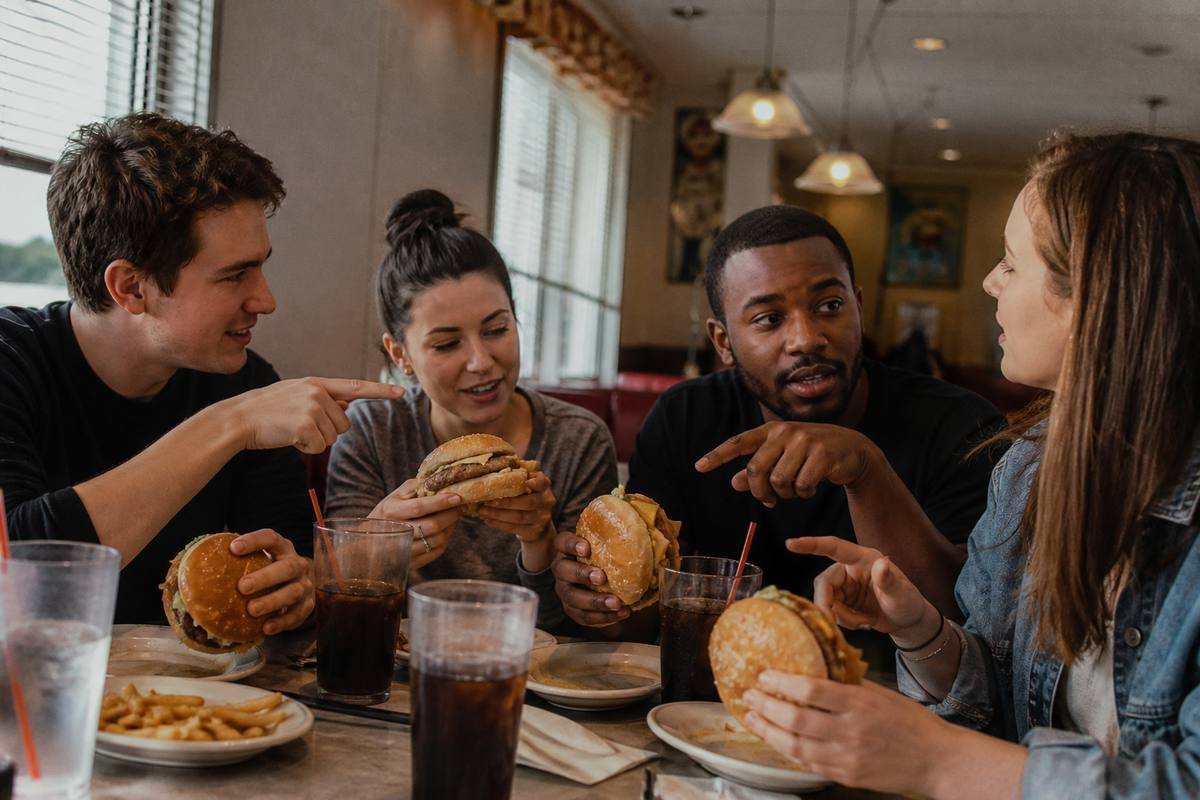
Ask an American where to find the best fast food burger and you will not get an answer. You will get an argument. Californians speak of In-N-Out with the reverence usually reserved for religious experiences. Texans will defend Whataburger against all challengers, sometimes loudly, always proudly. East Coasters point to Shake Shack’s crinkle fries and creamy custard, Midwesterners swear by Culver’s ButterBurgers, and Five Guys loyalists everywhere insist that a brown paper bag turning translucent with grease is the true mark of quality. These loyalties run deep because they are tangled up with geography, childhood memories, and regional identity. This article sets sentiment aside as much as possible and examines America’s five most beloved burger chains on their actual merits: the beef, the toppings, the fries, the value, and the overall experience. By the end, you may not change your allegiance, but you will understand exactly what you are arguing about.
Why These Five Chains
The fast food burger market is enormous, and giants like McDonald’s, Burger King, and Wendy’s serve billions of customers with remarkable consistency. But the five chains in this comparison occupy a different category, often called “better burger” or premium fast food. Each one built its reputation on a specific promise about quality: fresh beef instead of frozen, food cooked to order instead of held under heat lamps, and menus short enough that everything on them can be done well. Each also inspires the kind of customer devotion that mainstream chains can only dream about. These are the burgers people plan road trips around.
In-N-Out Burger: The West Coast Legend
Founded in 1948 by Harry and Esther Snyder in Baldwin Park, California, In-N-Out is the oldest chain on this list and arguably the most mythologized. The Snyder family still owns the company outright, has never franchised, and expands so slowly that new state openings make national news.
The menu is famously tiny: hamburger, cheeseburger, Double-Double, fries, shakes, and drinks. That is the entire printed menu. The unprinted menu is another matter. The so-called secret menu, which the company acknowledges openly, includes Animal Style burgers with mustard-grilled patties, extra spread, and grilled onions, along with protein-style burgers wrapped in lettuce instead of a bun.
What makes In-N-Out exceptional is its supply chain. The company owns its own patty-making facilities, delivers fresh beef to every store, and refuses to open locations beyond the range of its distribution centers, which is why the chain took decades to move east. The burgers themselves are modest in size and remarkably inexpensive, with a Double-Double costing less than a fancy coffee. Critics note that the patties are thin and the fries, cut fresh from whole potatoes in each store, often emerge pale and soft unless ordered well-done. Devotees consider these complaints heresy.
Five Guys: The Maximalist
Five Guys began in 1986 in Arlington, Virginia, when Jerry Murrell and his sons opened a carryout burger shop with a simple philosophy: use the best ingredients, make everything to order, and never install a freezer. To this day, Five Guys locations contain coolers but no freezers, and the day’s potatoes are stacked in sacks in the dining room with a sign announcing which farm they came from.
Where In-N-Out is minimalist, Five Guys is abundance incarnate. A standard hamburger comes with two patties, and all fifteen toppings are free, from grilled mushrooms to jalapeños to A.1. sauce. The burgers are hand-formed, cooked well-done on a flat grill, and juicy despite the thorough cooking thanks to their high fat content. The fries are boardwalk-style, cooked in pure peanut oil, and served in comically excessive portions; a large fry can feed three people, and the crew tosses an extra scoop loose into the bag on principle.
The trade-off is price. Five Guys is by a wide margin the most expensive chain in this comparison, and a burger, fries, and drink can approach twenty dollars in some cities. Fans argue you are buying two meals’ worth of food. Skeptics argue that a great burger should not require a financial decision.
Shake Shack: Fast Food in a Tailored Suit
Shake Shack has the strangest origin story in fast food: it began in 2001 as a hot dog cart in New York City’s Madison Square Park, run by restaurateur Danny Meyer’s fine-dining organization to support park restoration. The cart became a kiosk, the kiosk added burgers, and the burgers, made from a custom Angus blend and served on soft potato rolls, became a phenomenon with lines stretching across the park.
The ShackBurger remains the standard-bearer: a smashed-style patty with a proper crust, American cheese, lettuce, tomato, and ShackSauce on a Martin’s potato roll. The frozen custard shakes are the best desserts in this field, and the crinkle-cut fries are crisp and nostalgic. Shake Shack also goes further than any competitor on ingredient standards, using beef raised without antibiotics or added hormones.
Shake Shack’s weaknesses mirror its strengths. Portions are modest and prices are high, so hearty appetites leave either hungry or significantly poorer. And as the company has grown from cult favorite to publicly traded corporation with hundreds of locations worldwide, longtime fans debate whether the magic has survived the scale.
Whataburger: The Pride of Texas
Harmon Dobson opened the first Whataburger in Corpus Christi, Texas, in 1950, with a vision of a burger so big you needed two hands to hold it and so good you would say “What a burger!” out loud. The five-inch bun was novel then and remains the chain’s signature, along with the striking orange-and-white striped A-frame buildings.
Whataburger’s classic burger is a large, thin, one-hundred-percent beef patty served on that oversized toasted bun with mustard, lettuce, tomato, pickles, and diced onions. The mustard-forward dressing is a distinctly Texan choice and gives the burger a tangy identity all its own. The menu is the broadest in this comparison, spanning the Honey Butter Chicken Biscuit, breakfast taquitos, and the beloved spicy ketchup, and the restaurants famously stay open twenty-four hours a day.
Whataburger inspires perhaps the fiercest loyalty of any chain in America; when a private equity firm bought a majority stake in 2019, Texans reacted as though a state monument had been sold. Objectively, the burgers are good rather than transcendent, but Whataburger is not really competing on patty texture. It is competing on identity, generosity, and being there at two in the morning, and on those measures it has no equal.
Culver’s: The Midwest’s Quiet Champion
Culver’s, founded in 1984 in Sauk City, Wisconsin, by the Culver family, may be the least famous chain on this list nationally and the most consistently praised by people who actually rate these things. In recent years, Culver’s has topped multiple national consumer surveys of burger quality, beating every rival in this article.
The signature ButterBurger is not, despite the name, drenched in butter; the crown of the bun is lightly buttered and toasted, a Wisconsin touch that adds richness without grease. The patties are made from fresh, never-frozen Midwest beef, seared thin on a flat grill with crisp, lacy edges, and the cheese options include genuine Wisconsin cheddar. The supporting menu is a Midwestern feast: fried cheese curds that squeak, crinkle fries, and fresh frozen custard churned in small batches throughout the day, in a rotating flavor of the day that regulars track like the weather.
Culver’s is also the value story of this group, with prices closer to mainstream fast food than to Five Guys or Shake Shack. Its main limitation is geography; the chain is thickest in Wisconsin and the surrounding Midwest, though it has been expanding steadily into the South and West.
Head-to-Head: The Numbers and the Verdicts
The chart below summarizes how the five chains compare across the categories that matter most. Prices are approximate national averages for a signature burger and vary by location.
| Category | In-N-Out | Five Guys | Shake Shack | Whataburger | Culver’s |
|---|---|---|---|---|---|
| Founded | 1948, California | 1986, Virginia | 2001, New York | 1950, Texas | 1984, Wisconsin |
| Signature burger | Double-Double | Cheeseburger | ShackBurger | Whataburger | ButterBurger |
| Approximate price | 5 to 6 dollars | 12 to 14 dollars | 8 to 10 dollars | 6 to 8 dollars | 5 to 7 dollars |
| Beef | Fresh, never frozen | Fresh, never frozen | Fresh Angus blend | Fresh, never frozen | Fresh Midwest beef |
| Fries | Fresh-cut, divisive | Boardwalk-style, huge | Crinkle-cut, crisp | Thin and standard | Crinkle-cut, solid |
| Dessert | Basic shakes | Milkshakes | Frozen custard | Basic shakes | Fresh frozen custard |
| Value for money | Exceptional | Fair | Modest | Good | Excellent |
| Availability | West and Southwest | Nationwide | Major cities, growing | Texas and the South | Midwest, expanding |
A few honest verdicts emerge from the comparison. For pure value, nothing touches In-N-Out, which serves a fresh-beef cheeseburger for the price of a gas station sandwich. For sheer quantity and topping freedom, Five Guys stands alone. For the most refined burger and the best dessert, Shake Shack takes the prize. For personality, hours, and hometown pride, Whataburger cannot be beaten. And for the best all-around combination of burger quality, sides, dessert, and price, Culver’s has a genuine claim to being the best burger chain in America that half the country has never tried.
The Deeper Truth About Burger Loyalty
Here is what a decade of surveys, blind taste tests, and road trip pilgrimages all quietly reveal: the differences between these five chains, while real, are smaller than the passion suggests. All five use fresh beef. All five cook to order. All five would have been considered miraculous by the standards of fast food in 1980.
What people are actually defending when they defend their chain is a memory. In-N-Out tastes like California road trips and late nights after the beach. Whataburger tastes like Texas homecomings and post-game celebrations. Culver’s tastes like family suppers after a long Midwest winter drive. The burger is the vessel; the loyalty is to the life that happened around it.
That said, taste is not entirely subjective, and there is one recommendation this comparison can make without hedging. If your travels ever take you through the Midwest and you have never pulled into a Culver’s, order a Deluxe ButterBurger, a side of cheese curds, and whatever the flavor of the day happens to be. You will understand, in about four bites, why the quietest chain on this list keeps winning the national polls. And if you disagree afterward, congratulations: you are now part of the great American burger argument, and there is no more delicious debate to join.
Leave a Reply