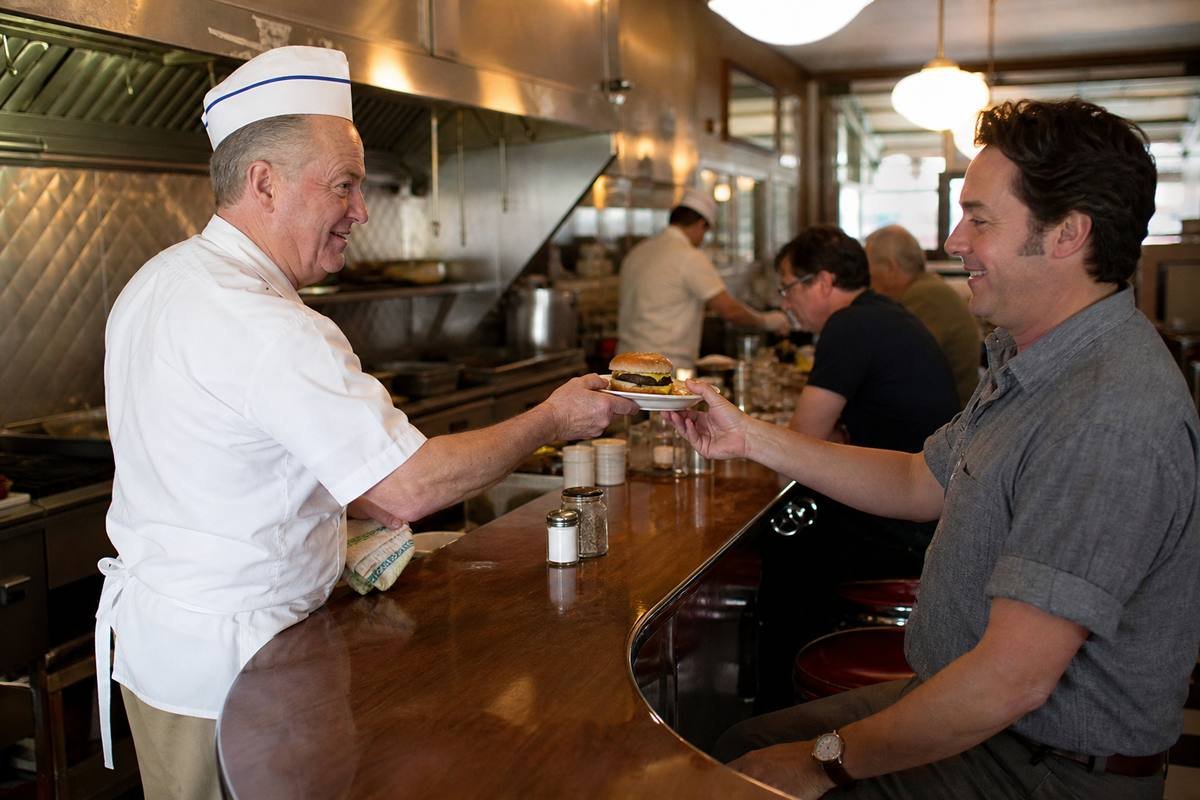
Few foods capture the spirit of the United States quite like the hamburger. It is served at backyard cookouts in the suburbs, at roadside diners along dusty highways, in white-tablecloth restaurants where chefs charge thirty dollars for a single patty, and at drive-through windows in every state in the nation. Americans eat an estimated fifty billion burgers each year, which works out to roughly three burgers per person, per week. Yet for all its popularity, the burger’s story is surprisingly tangled, full of competing claims, colorful characters, and moments of genuine culinary revolution. This article traces the full journey of the American burger, from its disputed origins in the late nineteenth century to its current status as a global ambassador of American cooking.
Where Did the Burger Actually Come From?
Before the burger became American, its central idea traveled a long road. Minced beef preparations existed for centuries across Europe and Asia. The most direct ancestor, however, is generally agreed to be the Hamburg steak, a dish of chopped, seasoned beef that was popular in the German port city of Hamburg during the 1800s.
When German immigrants crossed the Atlantic in enormous numbers during the mid-nineteenth century, they brought their food traditions with them. Restaurants in New York and other port cities began advertising “Hamburg-style steak” to attract these new arrivals, who were often homesick and hungry for familiar flavors. By the 1870s, the Hamburg steak was a fixture on American menus, usually served as a plated dish with gravy, onions, and bread on the side.
The crucial leap, the one that created the hamburger as we know it, was placing that patty between two pieces of bread so it could be eaten by hand. That simple act of assembly transformed a sit-down dinner into portable food for working people, and it is precisely this moment that several American towns claim as their own.
The Competing Origin Claims
At least five serious claims exist for the invention of the hamburger sandwich, and each has passionate defenders.
Louis’ Lunch, New Haven, Connecticut (1900). According to family legend, a customer rushed into Louis Lassen’s small lunch wagon and asked for something he could eat on the run. Lassen placed a broiled beef patty between two slices of toast, and the hamburger was born. The Library of Congress has recognized Louis’ Lunch as the birthplace of the hamburger, and the restaurant still serves its burgers on toast to this day, steadfastly refusing to offer ketchup.
Charlie Nagreen, Seymour, Wisconsin (1885). Fifteen-year-old “Hamburger Charlie” was selling meatballs at the Outagamie County Fair when he realized customers could not walk around while eating them. He flattened a meatball, tucked it between slices of bread, and called it a hamburger. Seymour now hosts an annual burger festival in his honor.
Frank and Charles Menches, Hamburg, New York (1885). The Menches brothers, concession vendors at the Erie County Fair, allegedly ran out of pork for their sandwiches and substituted ground beef, naming the result after the town where the fair was held.
Oscar Weber Bilby, Tulsa, Oklahoma (1891). The Bilby family claims Oscar served ground beef patties on his wife’s homemade yeast buns at a Fourth of July gathering, which would make him the first to use a true bun rather than sliced bread.
Fletcher Davis, Athens, Texas (late 1880s). “Old Dave” reportedly sold ground beef sandwiches with mustard and onion at his lunch counter and later introduced them to a national audience at the 1904 St. Louis World’s Fair.
The truth is that the hamburger probably had many simultaneous inventors. The Hamburg steak was everywhere, bread was everywhere, and American workers everywhere needed fast, cheap, filling food. The idea was simply waiting to happen.
The White Castle Revolution
Whoever invented the burger, it was White Castle that turned it into an industry. In 1921, in Wichita, Kansas, a short-order cook named Walter Anderson partnered with insurance man Billy Ingram to open a small burger stand with white porcelain walls and gleaming stainless steel counters.
The design was no accident. In the early 1920s, ground beef had a terrible reputation. Upton Sinclair’s 1906 novel The Jungle had exposed horrifying conditions in the meatpacking industry, and many Americans believed ground meat was made from scraps and worse. White Castle’s founders fought that perception head-on. The spotless white buildings signaled cleanliness. The kitchens were open so customers could watch their food being cooked. Ingram even funded a university study in which a medical student lived on nothing but White Castle burgers and water for thirteen weeks, emerging in good health.
White Castle also standardized the product. Every burger was a small, square, thin patty cooked on a bed of onions, served on a soft bun, and priced at five cents. The company pioneered the concepts of chain restaurants, centralized supply, and consistent branding. Without White Castle, there is no fast food industry as we know it.
The Golden Age: Drive-Ins, Car Culture, and the Rise of McDonald’s
After the Second World War, America fell in love with the automobile, and the burger went along for the ride. Drive-in restaurants with carhop service spread across the country during the 1940s and 1950s, becoming social hubs for a newly mobile generation of teenagers.
The most consequential burger stand of this era belonged to two brothers in San Bernardino, California. Richard and Maurice McDonald ran a successful drive-in, but in 1948 they made a radical decision. They fired their carhops, cut their menu down to a handful of items, and reorganized their kitchen like a factory assembly line. They called it the Speedee Service System. A burger that once took twenty minutes to reach a customer now took thirty seconds.
A milkshake machine salesman named Ray Kroc visited the brothers in 1954, saw the future, and convinced them to let him franchise the concept nationally. By the time Kroc bought the brothers out in 1961, the golden arches were multiplying across the American landscape. Burger King had launched in Miami in 1954 with its flame-broiled Whopper. Wendy’s followed in 1969, promising fresh, never-frozen beef and square patties that hung over the edge of the bun. The burger wars had begun, and the American appetite proved bottomless.
How Burger Consumption Grew Over the Decades
The numbers tell the story of an obsession that only deepened with time. The following chart illustrates the approximate share of beef consumed as ground beef in the United States across the decades, reflecting the burger’s growing dominance.
| Decade | Ground Beef as Share of All Beef Consumed | Defining Burger Development |
|---|---|---|
| 1920s | Roughly 15 percent | White Castle standardizes the burger |
| 1950s | Roughly 25 percent | McDonald’s franchising begins |
| 1970s | Roughly 35 percent | Fast food chains reach every state |
| 1990s | Roughly 42 percent | Value menus and burger wars peak |
| 2010s | Roughly 50 percent | Gourmet and fast-casual burger boom |
| 2020s | Over 50 percent | Smash burgers and plant-based patties |
Today, ground beef accounts for more than half of all beef eaten in the United States, and the vast majority of it ends up inside a bun.
Regional Burger Styles: A Nation of Variations
One of the great pleasures of burger culture in America is how differently each region interprets the same basic idea. These are not minor tweaks; they are distinct traditions with fierce local loyalty.
The Oklahoma Onion Burger
Born during the Great Depression, when meat was expensive and onions were cheap, this style involves pressing a huge handful of paper-thin onion slices directly into the patty as it cooks on the griddle. The onions caramelize into the beef, creating a sweet, savory crust. El Reno, Oklahoma remains the spiritual home of this style.
The Butter Burger of Wisconsin
Wisconsin does everything with dairy, and its burgers are no exception. A butter burger features a generous pat of butter melted directly onto the patty or slathered on the toasted bun. Solly’s Grille in Milwaukee is famous for a version so buttery it pools on the plate.
The Juicy Lucy of Minneapolis
Two Minneapolis bars, Matt’s Bar and the 5-8 Club, both claim to have invented this inside-out cheeseburger, in which molten cheese is sealed inside the patty rather than melted on top. First-time eaters are warned to wait before biting, because the cheese core stays scalding hot.
The Green Chile Cheeseburger of New Mexico
New Mexicans top their burgers with roasted Hatch green chiles, adding smoky heat that transforms the entire experience. The state takes this tradition so seriously that it maintains an official Green Chile Cheeseburger Trail for travelers.
The Steamed Cheeseburger of Connecticut
In and around Meriden, Connecticut, burgers are not grilled or griddled but steamed in special cabinets, along with blocks of cheddar that melt into a velvety sauce. The result is an exceptionally juicy, soft-textured burger found almost nowhere else on earth.
The California Style
Popularized by In-N-Out, the California burger emphasizes freshness: crisp iceberg lettuce, ripe tomato, and a tangy pink spread on a toasted bun. In-N-Out’s not-so-secret menu, with its Animal Style mustard-fried patties, has achieved cult status far beyond the West Coast.
The Gourmet Burger Movement
For most of the twentieth century, the burger was cheap food, and proudly so. That changed in the early 2000s. Chefs began asking what would happen if the humble burger received the same attention as a fine steak.
Daniel Boulud is often credited with lighting the fuse. In 2001, at his New York restaurant DB Bistro Moderne, he introduced a burger stuffed with braised short ribs, foie gras, and black truffle, priced at twenty-seven dollars. Critics scoffed, then tasted it, then stopped scoffing.
The movement spread quickly. Restaurants began grinding custom blends of chuck, brisket, and short rib. Pat LaFrieda, a New York butcher, became famous for designing proprietary blends for individual restaurants. Brioche buns replaced spongy white bread. House-made pickles, artisanal cheeses, and thick-cut bacon became standard. Danny Meyer’s Shake Shack, which began as a hot dog cart in Madison Square Park, grew into a publicly traded company by proving that fast food and quality ingredients were not mutually exclusive.
The smash burger technique became the defining method of the 2010s and 2020s. By pressing a ball of beef firmly onto a screaming-hot griddle, cooks maximize the Maillard reaction, the chemical process that creates deep browning and intense flavor. The thin, crispy-edged, lacy patty became the signature of a new generation of burger joints.
The Burger Today: Tradition Meets Innovation
The modern American burger scene is broader than it has ever been. At one end sit the classic institutions, some more than a century old, still flipping patties the same way they always have. At the other end sit laboratories producing plant-based patties engineered to bleed, sizzle, and taste like beef. Impossible Foods and Beyond Meat have placed their products in thousands of restaurants, and even the most traditional chains now offer meatless options.
Health-conscious variations have flourished as well. Turkey burgers, salmon burgers, black bean burgers, and lettuce-wrapped bunless burgers all have devoted followings. Meanwhile, regional styles that once stayed hidden in their home states now travel the country through restaurant expansions and social media, where a perfectly constructed cheeseburger remains among the most photographed foods on any platform.
What has not changed is the burger’s essential democracy. It costs a few dollars at a drive-through and a small fortune at a steakhouse, but the fundamental pleasure is identical: seasoned beef, melted cheese, soft bun, and whatever toppings make it yours. No food is more customizable, and no food is more American.
Conclusion: More Than a Meal
The story of the American burger is really the story of America itself. It began with immigrants adapting an old-world recipe to new-world circumstances. It grew through invention, salesmanship, and an unmatched national talent for standardization and scale. It splintered into proud regional dialects, was elevated by ambitious chefs, and continues to reinvent itself for a new century of eaters.
The next time you pick up a burger, whether from a hundred-year-old lunch counter in New Haven or a food truck experimenting with wagyu beef and gochujang mayonnaise, take a moment to appreciate the history in your hands. That sandwich carries with it the fingerprints of fairground vendors, Depression-era cooks stretching a pound of beef with onions, drive-in carhops on roller skates, and every backyard griller who ever argued about the right moment to flip. The burger is not just America’s favorite food. It is America’s autobiography, written one patty at a time.
Leave a Reply