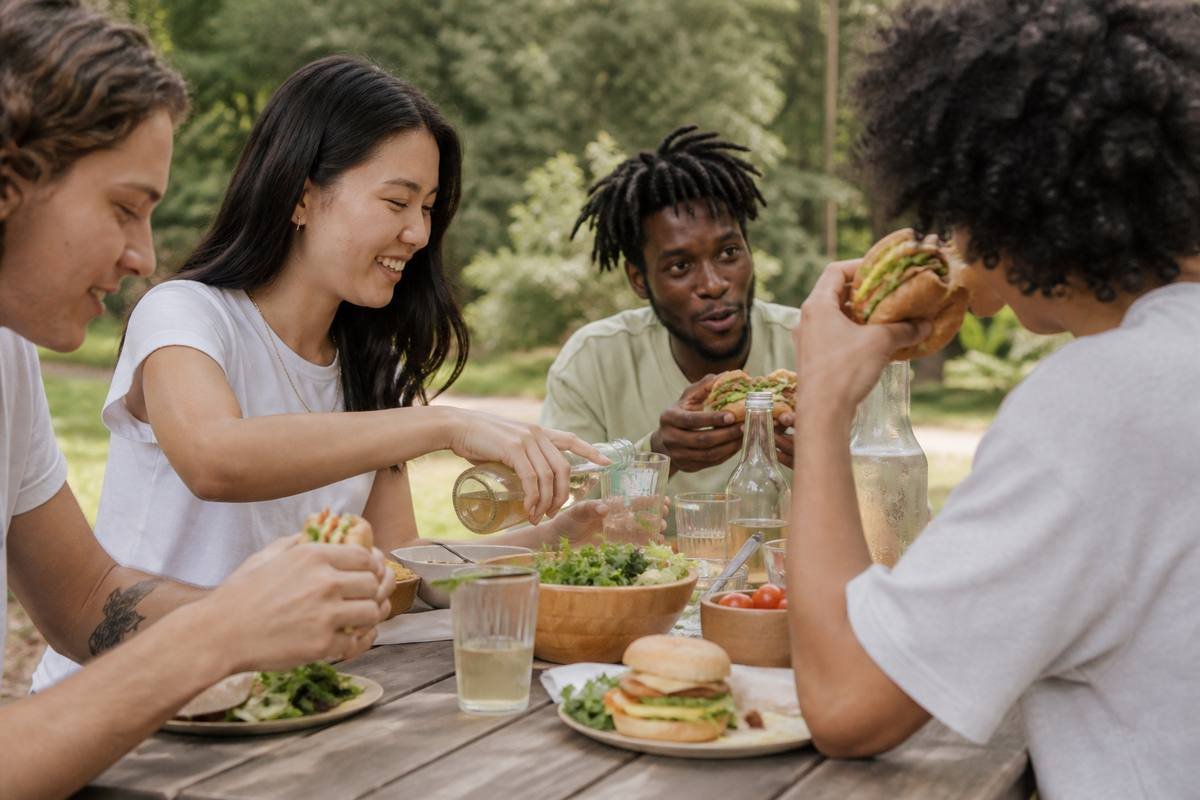
For most of the twentieth century, the veggie burger was a punchline. It was the dry, brown puck at the bottom of the cookout cooler, the apology on the menu, the thing that tasted of beans and good intentions and absolutely nothing like a burger. Then, in the span of about five years, everything changed. Burgers made entirely from plants began to sizzle on griddles, drip pink juice, and fool experienced eaters in blind tastings. National fast food chains put them on menus from coast to coast. Steak-loving skeptics tried them on a dare and went quiet halfway through the first bite. The plant-based burger became one of the most discussed food inventions of the century, celebrated as the future of protein by some and dismissed as ultra-processed imitation by others. This article tells the full story: where the veggie burger came from, the genuine science that transformed it, how the major players compare, how to cook these patties properly at home, and an honest accounting of what they are and are not.
The Long, Humble History of the Meatless Patty
The plant-based burger did not begin in a Silicon Valley laboratory. It began, like so much of burger history, with people improvising.
Vegetarian meat substitutes are ancient; Chinese Buddhist cuisine has crafted convincing mock meats from wheat gluten and tofu for over a thousand years. In America, the story runs through John Harvey Kellogg, the eccentric Michigan physician who developed nut-and-grain meat substitutes at his Battle Creek sanitarium in the 1890s, selling products like Protose to health-minded Victorians. But the veggie burger proper, a meatless patty designed to sit in a bun, is usually credited to Gregory Sams, a London restaurateur who marketed the “VegeBurger” in 1982, and to Paul Wenner, an Oregon restaurant owner who invented the Gardenburger the same decade after packing leftover rice pilaf into a patty shape.
These first-generation burgers shared a defining philosophy: they were not pretending to be beef. They were vegetable-forward, built from grains, beans, mushrooms, and vegetables, and they aimed at people who already did not want meat. That philosophy was also their ceiling. For the ninety-plus percent of Americans who ate and enjoyed beef, a patty that tasted like seasoned rice and black beans solved no problem they had. For decades, the veggie burger stayed in its niche, feeding the converted and converting almost no one.
The Breakthrough: Engineering the Experience of Beef
The revolution began with a change in the question. Instead of asking how to make a good vegetarian patty, two companies asked what beef actually is, molecule by molecule, and whether each molecule of the eating experience could be sourced from a plant.
Beyond Meat, founded in 2009 by Ethan Brown, attacked the problem through texture. Muscle is bundles of aligned protein fibers, so Beyond used heating, cooling, and pressure to extrude pea protein into fibrous structures that shear and chew like animal muscle. Fat, which in beef arrives in marbled pockets that melt during cooking, was mimicked with drops of coconut oil and cocoa butter distributed through the patty, solid when cold, liquefying on the griddle exactly as tallow does. Beet extract supplied the raw-red color that browns convincingly as the patty cooks.
Impossible Foods, founded in 2011 by Stanford biochemistry professor Patrick Brown, attacked flavor, and made the single most important discovery of the field. Brown’s team concluded that the defining taste of meat, the bloody, savory, umami character that no bean had ever approximated, comes substantially from heme, an iron-carrying molecule abundant in animal muscle. Heme also exists in plants; soybean roots produce a version called soy leghemoglobin. Impossible engineered yeast to produce this molecule by fermentation at industrial scale, and added it to a patty built on soy protein. Heme is the reason an Impossible burger cooked medium releases something uncannily like beef juice and aroma. It is not seasoning imitating meat. It is, chemically speaking, a core meat molecule, grown without the animal.
The results reached the mainstream fast. Burger King launched the Impossible Whopper nationally in 2019. White Castle, the chain that invented burger mass production, adopted Impossible sliders. Beyond patties appeared at Carl’s Jr. and in nearly every American supermarket. The veggie burger had stopped asking vegetarians for approval and started competing, openly, for the beef eater’s dollar.
The Honest Comparison: Plants Versus Beef
So how do they actually stack up? The fairest answer requires separating the questions, because the plant-based burger wins some comparisons, loses others, and ties more often than partisans on either side admit.
| Category | 80/20 Beef Patty (4 oz) | Impossible Burger (4 oz) | Beyond Burger (4 oz) | Classic Black Bean Patty |
|---|---|---|---|---|
| Calories | About 290 | About 240 | About 230 | About 150 |
| Protein | 19 grams | 19 grams | 21 grams | 5 to 10 grams |
| Total fat | 23 grams | 14 grams | 14 grams | 3 to 5 grams |
| Saturated fat | 9 grams | 8 grams | 5 grams | Under 1 gram |
| Fiber | 0 grams | 3 grams | 2 grams | 6 to 8 grams |
| Cholesterol | About 80 milligrams | 0 milligrams | 0 milligrams | 0 milligrams |
| Sodium (unseasoned) | About 75 milligrams | About 370 milligrams | About 390 milligrams | Varies, often 300+ |
| Tastes like beef | Is beef | Remarkably close | Close, slightly distinct | Not at all, nor trying |
On taste, a well-cooked Impossible or Beyond patty, dressed with cheese, sauce, and toppings in a toasted bun, lands astonishingly close to a fast-food beef burger, and in blind tests a meaningful share of eaters cannot reliably tell. Side by side with a thick, medium-rare pub burger of freshly ground chuck, beef still wins, and it is not particularly close; the new patties imitate the griddled, well-done, heavily dressed burger far better than they imitate a steakhouse experience.
On nutrition, the picture is genuinely mixed, and both cheering sections overstate their case. The plant patties carry no cholesterol, somewhat less saturated fat, some fiber, and equivalent protein, real advantages. They also carry roughly five times the sodium of unseasoned beef and a long ingredient list that places them squarely in the ultra-processed category, which health-minded eaters weigh seriously. A reasonable summary from nutrition researchers: swapping beef for Impossible or Beyond is a modest improvement on some measures, not a transformation of a burger into health food. The old-school bean patty, incidentally, crushes everything nutritionally, which is worth remembering.
On the environment, the evidence is the least ambiguous. Beef is the most resource-intensive common food on earth, and life-cycle analyses consistently find plant-based patties generate roughly ninety percent fewer greenhouse gas emissions and use a small fraction of the land and water per burger. Whatever one thinks of the taste debate, the environmental math is not really contested territory.
Cooking Plant-Based Patties Well: A Different Discipline
A large share of plant-based burger disappointment is not the product’s fault; it is beef technique misapplied to a different material. These patties reward cooks who learn their specific rules.
Rule one: the flat surface beats the grill. Plant patties render less fat than beef and dry faster over open flame, while a cast-iron skillet or griddle with a film of oil gives them the crust they need and keeps their moisture where it belongs. If grilling is non-negotiable, oil the patty itself generously and cook it over moderate rather than raging heat.
Rule two: do not overcook them, and this is the mistake nearly everyone makes. Habits trained by ground-beef safety push cooks to leave patties on until deeply well-done, but there is no bacterial reason to do so with plants, and past their window these patties turn dry and mealy. Impossible is genuinely best with a slightly pink, juicy center, seared hard on the outside, about three minutes per side. Beyond recommends cooking through to 165 degrees but punishes anything beyond it.
Rule three: season and dress with confidence. The patties arrive pre-salted, so go easy on added salt, but they respond beautifully to pepper, smoked paprika, and a finishing splash of soy or Worcestershire-style sauce. And because the format they imitate best is the fully dressed griddle burger, dress them fully: American cheese (or its plant-based equivalent), special sauce, pickles, shredded lettuce, grilled onions, toasted potato roll. A naked plant patty on a plate invites forensic comparison; a properly built sandwich invites dinner.
Rule four: do not abandon the old guard. The black bean burger, the mushroom-walnut patty, the falafel burger, freed from the impossible job of impersonating beef, remain delicious foods in their own right, cheaper and more wholesome than their high-tech cousins. The modern plant-based plate has room for both philosophies.
Where the Revolution Stands Now
The years since the 2019 breakout have complicated the triumphant story. After a meteoric rise, plant-based meat sales plateaued and then dipped; the curious tried the products, some stayed, many returned to beef, and the category settled into something smaller than the revolution its founders promised but far larger than the niche the Gardenburger ever occupied. Prices remain above beef, an inversion of the founders’ stated goal, though the gap narrows slowly. Meanwhile the next frontier, cultivated meat grown from actual animal cells in fermentation tanks, has cleared its first regulatory approvals in the United States, promising, someday, real beef without the cow, at a price and scale that remain unproven.
What seems durable is this: the plant-based burger permanently raised the floor. No one will ever again accept the dry bean puck as the necessary price of skipping meat, and every cookout host now has an easy, genuinely satisfying answer for the vegetarian at the table, a courtesy that was fantasy fifteen years ago. The burger, that most American of foods, absorbed the innovation the way it has absorbed everything else in its hundred-and-twenty-year story, the way it absorbed the drive-through, the freezer, the gourmet movement, and the smash technique, by simply making room on the menu.
The cow is not going anywhere soon; Americans still eat some fifty billion beef burgers a year, and the sizzle of chuck on a Saturday griddle remains one of the country’s defining sounds. But beside it now, on the same griddle, something new sizzles in the same key, pink in the middle, bleeding beet juice and heme, arguing its case one bite at a time. Whether you order it out of conviction, curiosity, or the simple desire to know what the future tastes like, the plant-based burger has earned what its ancestors never had: the right to be judged not as a substitute, but as a burger.
Leave a Reply