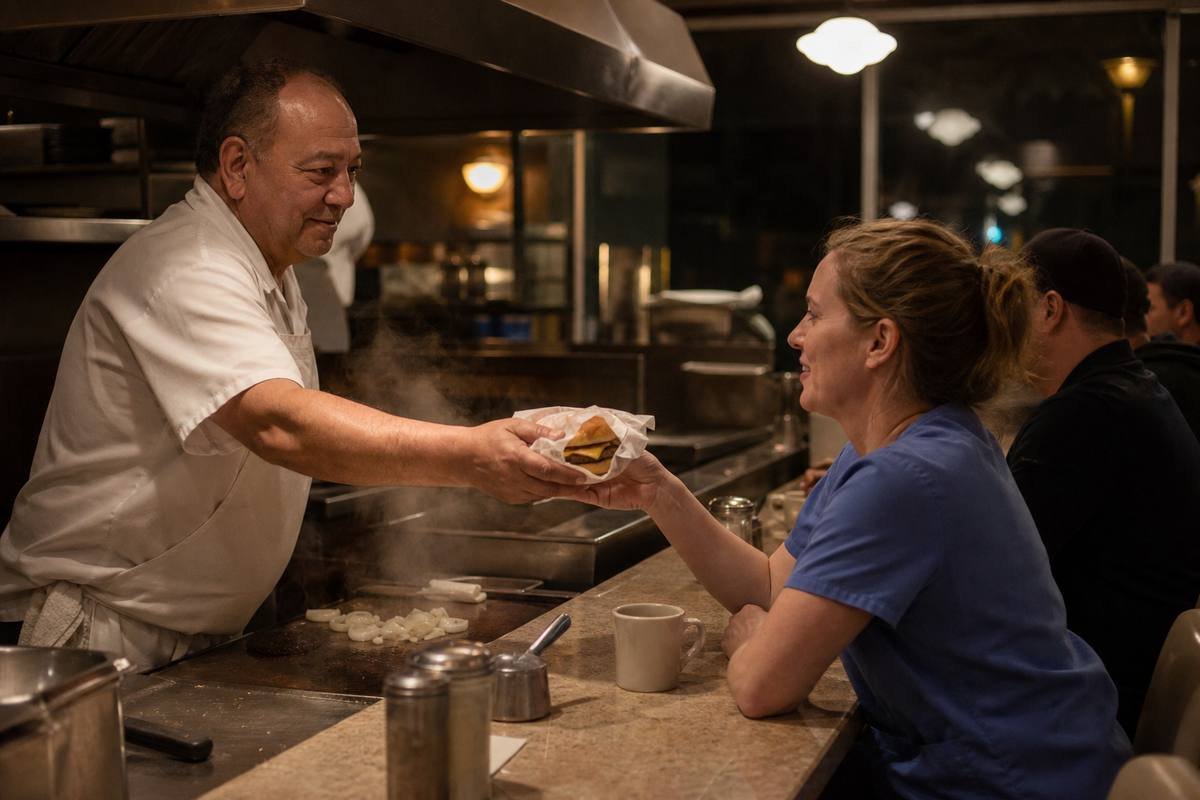
There is a particular hour in American towns when the lights change. Offices go dark. Grocery stores dim the produce aisle. The last movie lets out. And somewhere near a highway, a bowling alley, or a hospital shift change, a burger place stays open because people still need something hot in their hands. That burger is not the same sandwich you ate at lunch. The room is quieter. The cook is tired in a useful way. The customer is hungrier in a less polite way. Late-night burgers have their own weather, and once you notice it, you start seeking it out on purpose.
This is not nostalgia for its own sake. Late-night burger culture is a working system: diners, drive-through windows, hotel kitchens, gas station griddles, and the handful of independent shops that refuse to close at a respectable hour. It is also a set of habits. What you order at 1:15 a.m. is rarely what you would order at 1:15 p.m. The bread gets simpler. The cheese gets louder. The pickle starts to matter more than the tomato. If you want to understand American burgers, you have to understand the second dinner, the one that happens after the day has already used people up.
Why the Clock Changes the Sandwich
Hunger after midnight is not dainty. People coming off a shift, a show, a long drive, or a bad date are not browsing for nuance. They want salt, fat, heat, and something that arrives fast enough that they do not have time to talk themselves out of it. That demand shapes the kitchen. A late-night burger cook is not plating. They are keeping a griddle alive, watching a row of buns, and listening for the door. The best late-night burgers taste like they were made by someone who has already cooked two hundred of them and has no interest in ruining number two hundred and one.
There is also a chemical honesty to the hour. You are less likely to perform sophistication. You will ask for extra napkins. You will eat in the car with the dome light on. You will order a shake even if you told yourself you would not. That lack of performance is why so many people remember a 2 a.m. cheeseburger more clearly than a carefully arranged lunch. The sandwich did not have to impress a table. It had to take care of you.
Temperature helps too. Night air makes steam more visible. A burger wrapped in paper and carried to a parking lot seems hotter than the same burger under restaurant lights. The first bite happens while you are still standing, or while the engine is ticking. That small delay between pickup and eating is part of the flavor. The cheese settles. The bun compresses. The onions go from sharp to sweet in the wrap. Late-night burgers are often better five minutes later, which is exactly when most people actually eat them.
The Rooms That Stay Open
Not every burger shop can do late night well. The places that last tend to share a few unromantic qualities. They have a griddle that holds heat. They have a staff that can work tired without getting sloppy. They have a layout that does not collapse when the dining room thins out and the takeout window becomes the whole business. And they have a menu that shrinks after a certain hour without feeling like a punishment.
Classic diners still set the standard. A horseshoe counter, a cook who can see every seat, coffee that has been sitting a little too long, and a cheeseburger that arrives with a pickle spear and no speech about provenance. The diner late-night burger is a public object. You eat it next to a nurse, a trucker, a teenager who should be home, and someone filling out a crossword in pen. That mix is part of the taste, even if that sounds sentimental. Food eaten in mixed company has a different manner to it. Nobody is photographing the bun. Everybody is trying to get through the next three hours.
Drive-through windows after midnight are a different species. The lighting is harsher. The speaker box crackles. The bag is hotter. You do not see the cook, which means the burger has to communicate through paper and steam. The good ones still do: a smashed patty with crisp lace around the edge, American cheese fused to the meat, pickles that cut the grease. The bad ones taste like the kitchen has already emotionally clocked out. You can tell in the first bite. The bun is wet. The patty is gray. The whole thing was assembled by memory instead of attention.
Then there are the independents who treat late night as a sport. These are the shops that stay open because the neighborhood actually uses them: after concerts, after bar close, after high school games, after hospital shift change. The burger is often bigger, messier, and more local than a chain sandwich. Someone in the kitchen knows regulars by their order. That is not branding. That is how a small place survives the hours when rent is the same and foot traffic is not.
What People Actually Order When They Are Tired
Watch a late-night ticket rail and you will see a pattern. Double meat shows up more. Tomato disappears. Raw onion stays. Cheese is not optional. Sauce gets simpler: yellow mustard, ketchup, maybe a house spread that is mostly mayo and pickle brine. People stop stacking. They want a burger they can hold with one hand while the other hand finds keys, a parking space, or a friend who is taking too long in the restroom.
The breakfast-adjacent late-night burger is a special category. An egg on a cheeseburger at 1 a.m. is not brunch. It is insulation. Hash browns inside the bun are not a joke in this context. They are a way to make the sandwich last until morning without another stop. If a place can fry an egg without slowing the whole line, that cook understands night service. If the egg makes every burger late, the kitchen is not built for the hour, no matter how good the lunch menu is.
Milkshakes at midnight deserve a short defense. They are not dessert so much as temperature control. A hot burger and a cold shake keep your mouth from giving up. Vanilla still wins, because vanilla does not argue with onions. Chocolate can work if the burger is simple. Strawberry is a gamble and everyone who orders it knows that.
How to Get a Better Late-Night Burger on Purpose
You cannot control the hour, but you can control the order. Keep it closer to the kitchen’s muscle memory. A cheeseburger with pickles, onions, and mustard is almost always a safer night ticket than a burger with seven toppings the cook only sees at lunch. If the place smash-cooks, ask for it well done enough to get crust. If it is a thick patty shop, do not ask for medium-rare from a kitchen that has been open fourteen hours. You want doneness they can hit in their sleep, because at this hour they nearly are.
Look at the room before you commit. A clean griddle at 12:40 a.m. is a love letter. A pile of neglected tickets is a warning. If the staff still moves with a little snap, stay. If everyone is staring at a phone between orders, get the simplest sandwich and eat it fast. Late night rewards shops that treat the last customers like customers, not leftovers.
Eat sooner than you think. A wrapped burger in a hot car for twenty minutes becomes steam bread. Crack the window. Open the wrapper at the top. Give the bun a little air. This is not precious. It is the difference between a good night burger and a soggy one you resent in the morning.
If you are with other people, order like a group that has already decided. Night kitchens hate indecision more than they hate extra cheese. Know your order when you reach the speaker or the counter. Say it in the sequence the shop uses: meat, cheese, toppings, drink. You will get a hotter sandwich and a less annoyed cook, which is the same thing.
The Human Part, Which Is the Whole Point
People talk about late-night food as if it were a guilty pleasure. That framing is too small. A lot of the country works when the rest of the country sleeps. Hospital staff, warehouse crews, bakers, casino dealers, hotel clerks, delivery drivers, and the cooks themselves need a meal that does not require a reservation or a personality. The late-night burger is one of the last democratic plates we have. You can be overdressed or under-slept and still belong at the counter.
There is a kindness in that, even when the lighting is ugly. Somebody stayed to cook for you. Somebody wrapped the burger so it would still be edible in a parking lot. Somebody refilled the pickle bucket. Those are not romantic jobs, and they are why the sandwich exists at an hour when most kitchens have gone home. If you want to support burger culture, tip well after midnight and do not make the order weird unless the menu invites it.
The next time you find yourself hungry after the day is over, do not overthink it. Find the place with the lights still on and a cook still facing the griddle. Order the burger that shop has made ten thousand times. Sit down if there is a stool. Eat it while it is hot. Late-night burgers are not trying to be the most important sandwich in America. They are trying to get you to the next morning with a little more warmth than you had when you walked in. That is a serious job, and the places that still do it well are worth knowing by name.
Leave a Reply