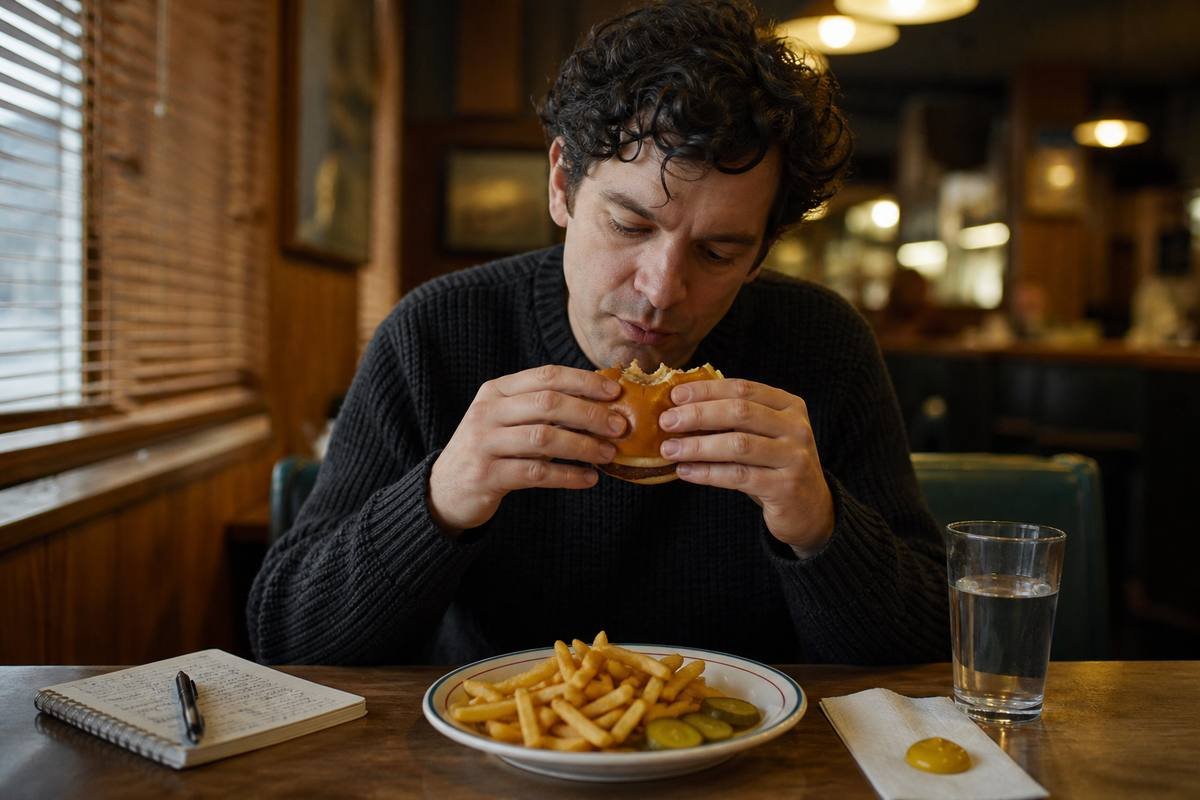
Everyone has an opinion about burgers, but very few people can explain their opinion. Ask the average eater why last night’s cheeseburger was great and the answer is usually a shrug and the word “juicy,” the burger world’s equivalent of describing a symphony as “loud.” Meanwhile, professional food critics, competition judges, and the serious burger obsessives who rank sandwiches for a living evaluate the same object with a discipline that would surprise most diners: they assess structure before the first bite, isolate seasoning from sauce, track how the sandwich changes from first bite to last, and can tell you within two bites whether a kitchen salted the patty or the crust. None of this expertise is secret, and none of it requires credentials. It requires a framework, a vocabulary, and a little deliberate practice. This final article in our series hands over the complete toolkit: the seven categories every serious burger evaluation covers, the specific tells that reveal a kitchen’s skill or carelessness, a scoring rubric you can apply at any counter in America, and the deeper argument for why judging burgers carefully makes eating them more joyful, not less.
Before the First Bite: The Visual Inspection
A trained judge learns an enormous amount about a burger while it is still sitting on the tray, and the pre-bite inspection takes fifteen seconds once the checklist is familiar.
Start with posture. A well-built burger sits level and holds its stack; a patty sliding off-axis, a top bun listing like a capsized boat, or toppings escaping the perimeter all signal careless assembly, and assembly care correlates strongly with every other kind of care. Check proportion next: the patty should reach, or slightly overhang, the bun’s edge. A patty entombed in an oversized bakery roll promises a mouthful of bread; the reverse promises structural collapse by the third bite.
Then read the surfaces. The bun’s cut face, glimpsed at the edge, should show the gold of real toasting; pale, untoasted bread is the single most common visible failure in American burger service, and it predicts sogginess with near-certainty. The patty’s edge tells you the cooking method and its execution: a lacy, dark, irregular fringe means a properly smashed patty on hot steel, grill stripes mean grates and flame, and a uniform gray band with no browning anywhere means a kitchen that steamed its beef on a crowded, tepid surface. Finally, the cheese: fully draped and fused to the patty means the cook used steam and timing; a stiff, barely warmed slice with sharp corners means the cheese landed thirty seconds before the pass and nobody cared.
The First Bite: The Most Informative Moment in Food
Competition judges call the first bite the moment of truth, and they stage it deliberately: a bite from the front arc of the sandwich, deep enough to capture every layer, taken without rearranging anything. What that bite reports, in order, is worth slowing down to notice.
First arrives texture, and texture is architecture made edible: the slight crackle of toasted bun, the give of the crumb, the crust’s resistance, then the patty’s tenderness. A great burger’s layers compress together and release together; a poor one’s layers slide, squirt, or fight. Judges use the word “cohesion” for this, the quality of a sandwich eating as one object rather than a stack of ingredients, and cohesion is the single strongest separator between good and great burgers.
Second arrives seasoning, and here is the most useful tell in all of burger judgment: salt on the crust versus salt in nothing. A properly seasoned patty announces itself immediately, the crust tasting emphatically of seasoned beef before any condiment registers. If the first flavor is ketchup, mayonnaise, or nothing at all, the kitchen under-salted, and no topping can repair it from the outside. Take one bite of naked patty edge, past the toppings, whenever possible; thirty seconds of investigation settles the question definitively.
Third arrives balance, the interplay this series has described from the beginning: richness from beef, cheese, and sauce; acidity from pickles, mustard, and tomato; sweetness from bun and caramelized elements; crunch from lettuce and toast; heat if the build promises it. The first bite should show most of these in proportion. A burger that tastes only rich is unfinished; one drowned in sauce is hiding something.
The Middle Bites: Where Burgers Are Won and Lost
Amateurs judge on bite one; professionals judge on bites four through seven, because the middle of a burger is where engineering meets time. Juices have now saturated downward, the cheese has cooled, the hand has compressed the stack, and every weakness surfaces on schedule. The bottom bun is the front line: a properly toasted, properly sauced bun holds through the finish, while an untoasted one dissolves into paste around bite five, the most common structural death in the burger world. Watch, too, for topping migration, the whole tomato slab hauled out by a single bite, the lettuce sheet dragging the build apart, failures of slicing and placement, not of ingredients. And notice temperature’s arc: a great burger stays warm and cohesive to the final bite, which is one hidden argument for the thin-patty, modest-size school of building; heroic ten-inch towers begin cold and end in rubble.
The last bite deserves its own note. Judges call the ideal a “complete finish,” a final bite containing patty, bun, and toppings in the same proportion as the first. It sounds trivial and is actually the harshest architecture test a sandwich faces.
The Seven Categories and the Scoring Rubric
Formalized, the framework becomes a rubric you can carry anywhere. Serious burger competitions, from state fairs to the national championships that award actual prize money, score along remarkably similar lines.
| Category | Weight | What Excellence Looks Like |
|---|---|---|
| Patty flavor and seasoning | 25 | Beef-forward, salted through the crust, tastes like something |
| Patty texture and cook | 20 | Real crust, tender loose interior, target doneness hit |
| Bun | 15 | Toasted, fresh, right size, survives to the last bite |
| Balance of build | 15 | Richness, acid, crunch, sweetness all present, none dominant |
| Cohesion and structure | 10 | Eats as one object; clean bites; no collapse |
| Cheese and toppings execution | 10 | Fully melted cheese, ripe produce, thoughtful placement |
| Overall impression | 5 | The unmeasurable: would you order it again tomorrow? |
Score each category out of its weight and a burger lands on a hundred-point scale. Calibration comes fast with use: the competent chain cheeseburger scores in the 60s, a very good local smash burger in the 70s and 80s, and the burgers you remember for years, the ones this series has chased across twenty articles, live above 90, where every category holds at once. The rubric’s real value is diagnostic rather than judicial; it converts “pretty good, I guess” into “excellent patty, under-toasted bun, needs pickles,” which is knowledge you can cook with.
Two judging disciplines keep scores honest. Judge the burger against its own ambition, not against a different genre: a griddled diner double and a medium-rare dry-aged pub burger are different instruments, and each should be scored on how completely it achieves its own form, the same way critics judge a taco stand and a tasting menu by their own promises. And separate price from quality at scoring time, then reunite them afterward as a value judgment; an honest 74-point burger for six dollars may be a better dinner than an 82 for twenty-two, but the palate should measure before the wallet votes.
The Vocabulary: Saying What You Taste
Judgment improves when language does, because words sharpen perception. A working burger vocabulary is short and learnable. For the patty: “crust” for the browned exterior, “loose” versus “dense” for the grind’s packing, “clean” versus “livery” for the beef’s flavor, “carryover gray” for the overcooked band under the surface. For structure: “cohesion,” “blowout” for rear ejection of fillings, “hinge” for a top bun that slides. For balance: “flat” for missing acid, “muddy” for too many competing toppings, “loud” for a single dominating element. For the finish: “returns” for a burger whose flavor calls you back between bites, the highest casual compliment in the lexicon. None of this is pretension; it is the same tool a mechanic’s vocabulary is, a way to find the problem fast and fix it next time.
Judging Your Own: The Home Cook’s Feedback Loop
The framework’s greatest payoff is not scoring restaurants but improving your own griddle. After each home burger session, run the rubric ruthlessly on your own work: Was the crust genuinely dark or politely beige? Did salt reach the first bite? Did the bottom bun survive? Did the last bite contain pickle? Every article in this series maps onto a category, the beef guide onto patty flavor, the science piece onto texture and cook, the bun and toppings guides onto their columns, the equipment arsenal onto everything, and the rubric tells you which article to reread. Cooks who score their own burgers for a season improve faster than cooks who merely eat them, for the same reason writers who revise beat writers who only draft.
Why Judging Makes Eating Better
There is a fair worry hiding under all this apparatus: that scoring a sandwich murders the joy of it, that the rubric turns dinner into homework. Twenty articles into this series, we can answer with confidence that the opposite is true. Attention is not the enemy of pleasure; it is the engine of it. The eater who can feel the crust shatter, catch the pickle’s acid doing its work, and notice the bun holding heroically at bite six is having strictly more fun than the eater who registers “juicy” and checks their phone. Every field of American enthusiasm, baseball, barbecue, hi-fi, cars, discovered the same secret: the fans who know the most love the thing the hardest.
And so this series ends where the burger itself always ends, at the last bite, hoping it contains a little of everything. Over twenty-one articles we have traced the sandwich from the Hamburg steak to the smash burger laureates, through the science and the cheese and the drive-through window, around the world and back to the home griddle. The final skill was always this one: to taste with attention the thing America built. The burger has earned that attention fifty billion times a year for a century. Take the first bite from the front arc. Notice everything. Score it if you like, or simply understand, at last, exactly why it is good. Then, in the oldest and best tradition of the American burger, order another.
Leave a Reply